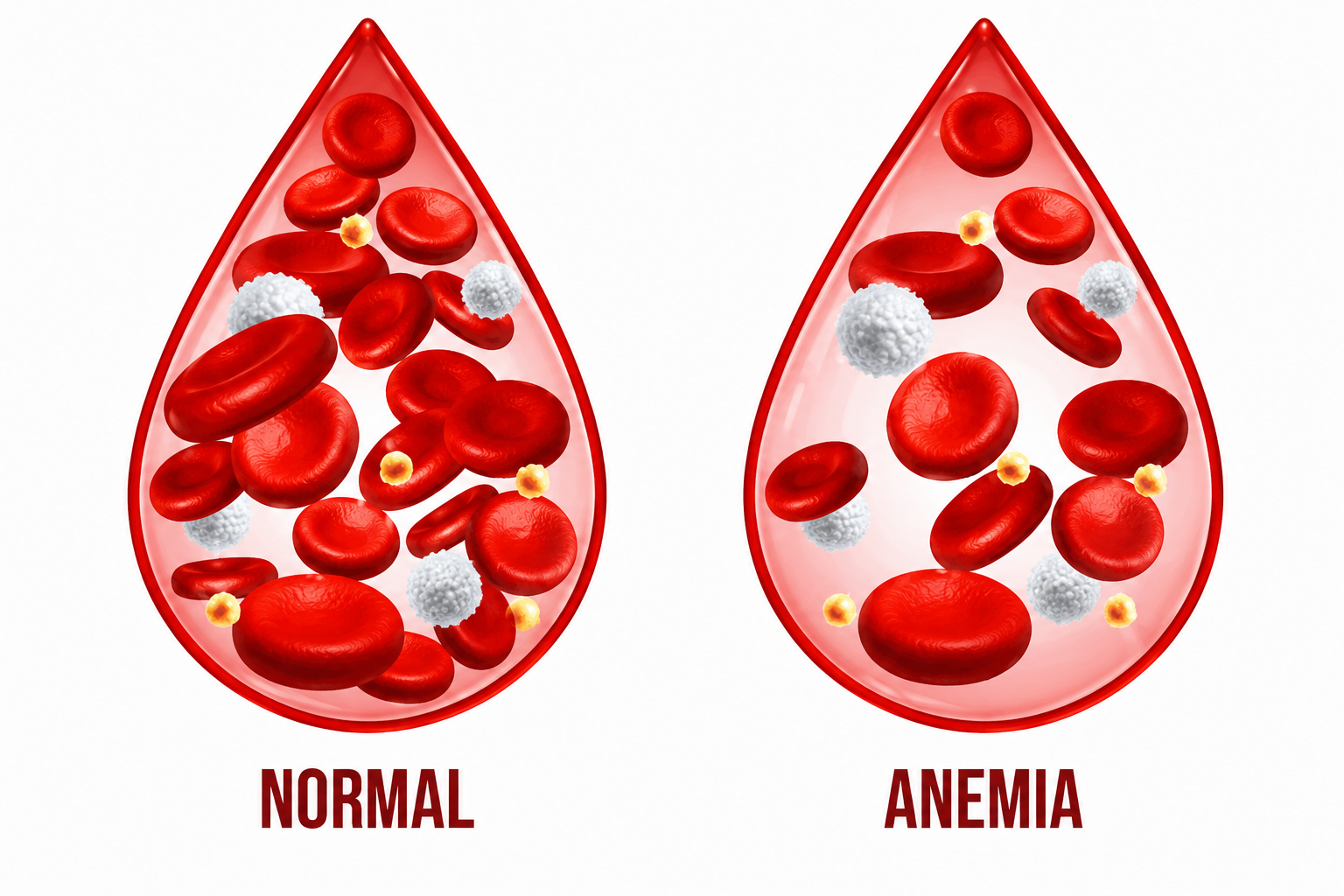
Anemia is a common disorder that affects nearly 25 percent of the population around the world.
Characterized by weakness and tiredness, anemia can range from mild to severe and temporary to long-term.
It can also be a sign of another serious illness. For that reason, it is important to consult
your doctor if you notice any symptoms.
Dr. Sfurti Mann is one of the top physicians in Gurgaon with over 18 years of experience in treating
common and complex illnesses with comprehensive care. She advocates proactive healthcare treatment
specific to your needs and helps in managing anemia naturally and effectively.
What is anemia?
Anemia is a condition caused by a reduction in healthy red blood cells that carry oxygen throughout the body.
It often occurs due to nutritional deficiencies, but other diseases may also be responsible.
There may be reduced production of healthy red blood cells or increased destruction of these cells.
Risk Factors
Several factors can increase your risk of developing anemia. The following are some common risk factors:
-
Diet lacking in vitamins and minerals:
Iron, vitamin B-12 and folate are essential for maintaining healthy red blood cells.
A deficiency of these nutrients can lead to anemia.
-
Intestinal disorder:
Intestinal disorders may interfere with nutrient absorption in the small intestine,
increasing the risk of anemia.
-
Menstruation:
Menstruation causes blood loss, placing women at a higher risk of iron deficiency anemia.
-
Pregnancy:
Pregnant women who do not take enough iron and folic acid supplements are more likely to develop anemia.
-
Family history:
Some forms of anemia are hereditary. A family history of anemia may increase your risk.
-
Chronic illness:
Diseases such as cancer, diabetes and kidney failure can affect red blood cell production and lead to anemia.
-
Other factors:
Certain medications, alcoholism and exposure to toxic chemicals may also contribute to anemia.
Causes of anemia
Different types of anemia are categorized based on their underlying causes.
- Anemia due to deficiency: Caused by deficiency of iron, folate or vitamin B-12.
- Anemia of inflammation: Caused by diseases such as cancer, HIV/AIDS and rheumatoid arthritis that interfere with red blood cell production.
- Aplastic anemia: A rare and life-threatening condition caused by infections, diseases or certain medications.
- Anemia linked to bone marrow illness: Occurs when diseases affecting the bone marrow reduce blood cell production.
- Hemolytic anemia: Caused by faster destruction of blood cells than production.
- Sickle cell anemia: Caused by defective hemoglobin that results in sickle-shaped red blood cells.
Symptoms of anemia
Symptoms of anemia may vary depending on the type, but some common signs include:
- Weakness and fatigue
- Yellowish or pale skin
- Shortness of breath
- Irregular heartbeat and chest pain
- Cold hands and feet
- Headache and dizziness
Treatment
Treatment for anemia focuses on increasing healthy red blood cell counts.
In most cases, iron, folate and vitamin B12 supplements are recommended.
In severe cases, blood transfusion or bone marrow transplant may also be required.